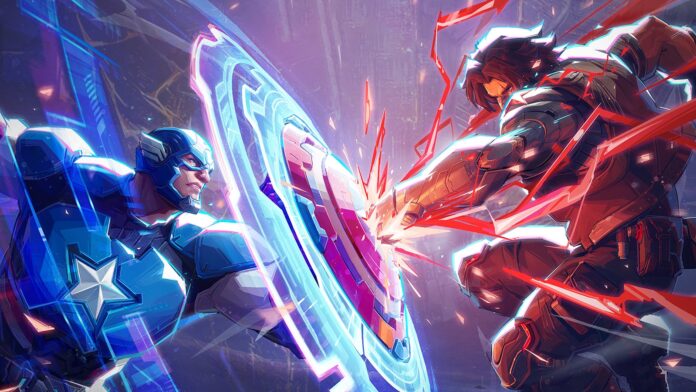
The widely popular hero shooter Marvel Rivals is seeing massive success on PS5, Xbox Series, and PC. But its developer NetEase has been firm that it’s not coming to Nintendo Switch, leaving Nintendo players out of luck on joining in the fun. But what about the Nintendo Switch 2?
We had the opportunity to pose this question to Marvel Rivals producer Weicong Wu this past week at the DICE Summit in Las Vegas. And fortunately for Switch fans, it sounds like a Switch 2 release is a real possibility.
As Wu put it: “We’re already in contact with Nintendo and working on some development kits. And whenever we find that we could provide great performance for our game on Switch 2, we’re open to that. The reason why we didn’t launch it onto the Switch, it was the first generation of that device they cannot provide a great experience for our gameplay. So if it could achieve that goal, we’re open to that.”
The Nintendo Switch 2 was finally officially announced just last month. While we don’t have too many details on its capabilities just yet, it appears to be a bigger and more powerful Nintendo Switch system. Notably, it looks like the console will have some sort of mouse-like controller functionality that could potentially make playing shooters like Marvel Rivals a bit more PC-like, though it still remains to be seen exactly how this will work.
The Nintendo Switch 2 doesn’t have a release date currently, but a Nintendo Direct has been confirmed for April 2. Marvel Rivals, meanwhile, is out now on other platforms, and we like it a lot. In our 8/10 review, we said that it “may be following closely in the slipstream of the hero shooters that have come before it, but by doing so Marvel Rivals has firmly placed itself in a strong position to take the crown for itself.” The Human Torch and The Thing are set to be the latest heroes joining the game on February 21.
Rebekah Valentine is a senior reporter for IGN. You can find her posting on BlueSky @duckvalentine.bsky.social. Got a story tip? Send it to rvalentine@ign.com.
The beloved PS1 RPGs Suikoden I and II return in just a few weeks in a remastered collection for Nintendo Switch, PS5, Xbox Series X|S, and PC. Suikoden I & II HD Remaster launches March 6, and the Day One physical edition is available to preorder now at major retailers, including Best Buy, Amazon, and Walmart.
The Suikoden I & II HD Remaster is available in a special Day One edition. This is essentially a standard edition that comes with a few extras, including immediate access to the Prosperity Orb and Fortune Orb in-game items, which double the amount of money and experience you earn from battles, respectively. You also get a bonus 57,300 Potch, which is the in-game money.
The Orb items are acquirable in the game, but they’re rare drops, so having them available immediately is a perk for players who don’t want to spend as much time farming Potch and XP.
The in-game freebies are only available with the Day One edition of Suikoden I & II HD Remaster. Games with Day One versions are usually still available to buy on launch day, but in some occasions they sell out before release and a standard edition takes its place.
You can preorder Suikoden I & II HD Remaster Day One edition for $50 for Nintendo Switch, PS5, and Xbox Series X at Best Buy, Amazon, and Walmart. Digital preorders are also available for consoles and PC.
Suikoden I & II HD Remaster includes enhanced versions of Suikoden I and II. The remasters of both games feature HD sprites and backgrounds, enhanced sound effects, and QOL options like auto-saving, adjustable battle speeds, and a conversation log for reviewing previous dialog.
More Gaming, Tech, and Entertainment Deals & Preorders
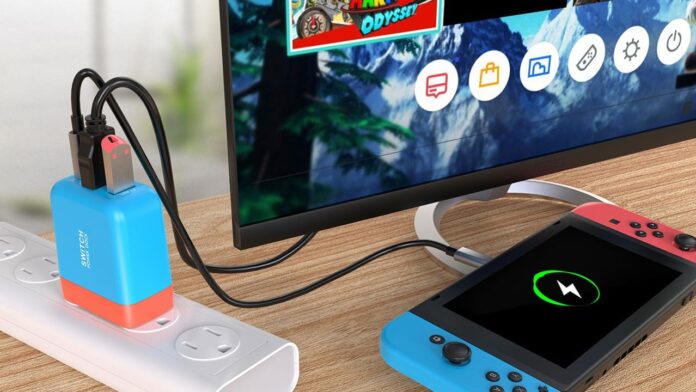
Sometimes bringing along the official Switch dock is a good idea if you know that there will be a TV to hook it up to, but unfortunately the dock is a little bulky and you’ll still need to bring along a wall charger. Instead, you might want to check out the Mirabox Portable 36W Nintendo Switch Dock Charger, which is currently only $19.99 after a 50% off coupon code “50LPZWW1“. This little gadget charges your Nintendo Switch (at its maximum charging rate) and has an HDMI port to connect your Switch to a TV. It has all the functionality of your dock in a more compact footprint.
50% Off Mirabox Portable Nintendo Switch Dock Charger
The Mirabox dock charger is clad in your choice of black, white, or the iconic Switch red and blue color scheme. It has three ports: a USB Type-C port, a USB Type-A port, and an HDMI port. The USB Type-C port supports Power Delivery up to 31W, which is more enough juice to charge the Switch at its maximum rate, which is only 18W. That benefit of a faster charging rate, besides quicker charging, is that you can play games while topping up the battery. The HDMI port connects your Switch to your TV. The Mirabox supports up to 1080p resolutions at 60Hz refresh rate.
The biggest advantage of the Mirabox is that it is 1/10th the size of the Switch dock. That makes it much easier to stow away in your bag without having to buy yet another larger Switch case. A USB Type-C cable is already included as well, so all you need to supply is your Nintendo Switch and an HDMI cable.
Get the 65W model for Steam Deck and Asus ROG Ally
Mirabox 65W Dock Charger (Better for Asus ROG Ally, Steam Deck)
Note that there’s a 65W model that is $25.99 after you apply the same code “N9XORL7H“. This is overkill for the Nintendo Switch,; however it’s the preferred model if you plan to use the charger dock with the Asus ROG Ally, which accepts up to 65W, or the Steam Deck, which accepts up to 38W. The HDMI port also supports up to 4K resolution at 60Hz.
Eric Song is the IGN commerce manager in charge of finding the best gaming and tech deals every day. When Eric isn’t hunting for deals for other people at work, he’s hunting for deals for himself during his free time.
Some new details about Nintendo’s plans for the Switch 2 launch have been revealed in the company’s latest earnings briefing, with president Shuntaro Furukawa revealing that Nintendo is preparing for a high level of demand for the new console. The executive also discussed Nintendo’s philosophy regarding pricing for the Switch 2 and confirmed there are no plans right now for a Switch price cut.
While answering shareholders’ questions about the launch, Furukawa revealed that Nintendo is anticipating a high level of demand for the new console. “As of now, we are taking the risk and proceeding with production to meet as large a demand as possible,” Furukawa said, adding that Nintendo would be estimating the initial demand for the console based off the reaction to its April 4 Switch 2 Nintendo Direct, as well as the response to its hands-on Switch 2 Experience events.
Nintendo is also making preparations in case it needs to quickly ramp up production of the consoles, as was the case when the original Nintendo Switch experienced supply issues in 2020. “As was true with Nintendo Switch, we believe it will not be easy to rapidly increase production capacity,” Furukawa said. “So based on our prior experience, we are making preparations to be able to respond as quickly as possible.”
The earnings call also included a question about the Switch 2’s pricing. While Nintendo hasn’t revealed a price or even a ballpark range for the Switch 2, Furukawa has explained some of the factors the company has to consider when it comes to pricing. As well as inflation and exchange rates, which Furukawa notes have “changed significantly” since the original Switch released in 2017, it also needs to “consider the price range that consumers expect for Nintendo products.”
“I cannot tell you a specific price for Nintendo Switch 2 at this time, but we are taking various factors into account,” Furukawa said, adding that the company has no plans to change the price of the original Nintendo Switch hardware.
While Nintendo is staying tight-lipped on the price, analysts have estimated that the console will cost around $400. The original Nintendo Switch launched for $300 in 2017, though when adjusted for inflation is equivalent to around $388, making a $400 price point for the Switch 2 closer to its predecessor than it first appears.
Until we get more information about the Switch 2 in the April 4 Nintendo Direct, check out everything we currently know about the upcoming console.
Donkey Kong Country Returns HD is the latest first party game for Nintendo Switch, and you can already save $15 off at Woot. If you enjoyed Donkey Kong Country: Tropical Freeze, Returns HD is another excellent entry you are sure to have fun with. There are many different worlds to traverse through, with a variety of collectibles and items to discover.
Amazon has the Apple AirPods 4 on sale for $99.99 today. These earbuds feature Spatial Audio, up to five hours of listening time per charge, and so much more. Apple AirPods 5 likely won’t be out for a good bit, so now is the perfect time to pick up a pair of new AirPods if your old ones are giving out.
Amazon has the Nvidia Shield 4k Android TV on sale for $129.99 today. This is still one of the best media streamers out there, especially with all its features. In our 8/10 review, we wrote, “For its speedy performance, AI upscaling, well-designed remote, and lower price, the Nvidia Shield TV is one of the best media streamers you can buy. Its ability to stream games makes it even more attractive for gamers with GeForce-based rigs.”
Final Fantasy Pixel Remaster Collection for $39.99
FINAL FANTASY I-VI Collection Anniversary Edition (2024)
The Final Fantasy Pixel Remaster Collection has hit a new all-time low at Woot, priced at just $39.99. The first six Final Fantasy titles paved the way for the series as we see it today. Many fans still regard both Final Fantasy IV and Final Fantasy VI as some of the best that Final Fantasy has to offer, with gripping narratives and engaging gameplay. This package includes all six Final Fantasy Pixel Remasters, which feature updated graphics, soundtracks, font, and more.
Super Monkey Ball Banana Rumble for $19.99
Super Monkey Ball Banana Rumble Launch Edition – Nintendo Switch
Super Monkey Ball Banana Rumble is the return to form many Monkey Ball fans have waited years for. You’ve got over 200 courses, tons of guest characters, and all sorts of modes—what’s not to love? In our 8/10 review, we wrote, “Super Monkey Ball Banana Rumble is a brilliant return to form. Monkey Ball has finally found its way home again with a set of 200 fantastic courses that range from delightfully charming to devilishly challenging, backed up by tight mechanics and predictable physics that put me in total control of my monkey’s fate.”
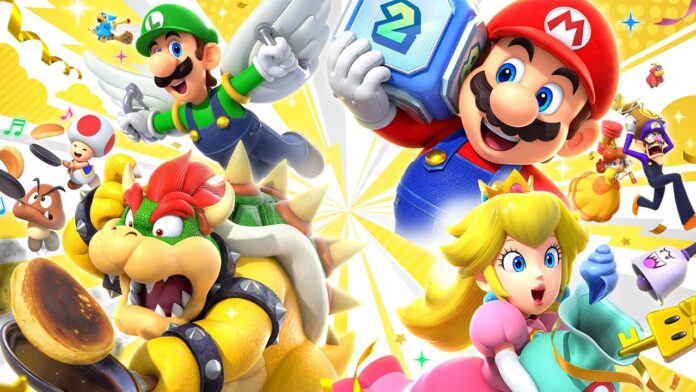
Mario Party is the quintessential party game for players of all ages. Whenever you’ve got a gathering of people, there’s never a question if Mario Party is going to be a fun activity or not. Super Mario Party Jamboree, the latest entry in the genre, is the best the series has been on Nintendo Switch, with seven different boards and over 100 minigames to explore. At $44.99, this is a great deal on one of the best games for Nintendo Switch.
Sonic X Shadow Generations for PS5 is $20 off at Woot right now. This package includes a remastered version of Sonic Generations and a brand-new campaign focused on Shadow. Both 2D and 3D levels are included, making for the ultimate package for any Sonic fan.
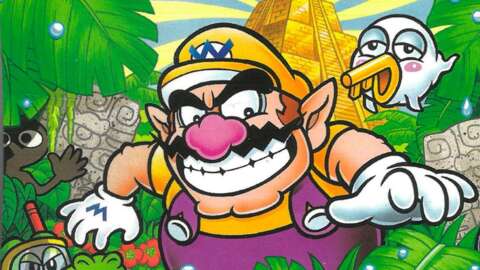
Just in time for Valentine’s Day, Nintendo is dropping Wario Land 4 on Nintendo Switch Online + Expansion Pack on February 14. The weird Game Boy Advance platformer sees the gassy antihero turning into Zombie Wario and Bouncy Wario–just a couple of the transformations–as he explores a golden pyramid for the riches inside.
Wario Land 4 originally debuted in 2001 as an early title for Game Boy Advance. It’s actually the fifth mainline Wario platformer in the series when taking into account Virtual Boy Wario Land. Additionally, Wario Land 4 arrived before the WarioWare franchise even existed.
Nintendo Switch Online costs $20 annually for individuals ($35 for families), offering online play and access to classic libraries for NES, SNES, and Game Boy. The Expansion Pack plan goes for $50 yearly for individuals ($80 for families), offering extras like DLC for Mario Kart 8 Deluxe and access to titles for Nintendo 64, Game Boy Advance, and Sega Genesis.
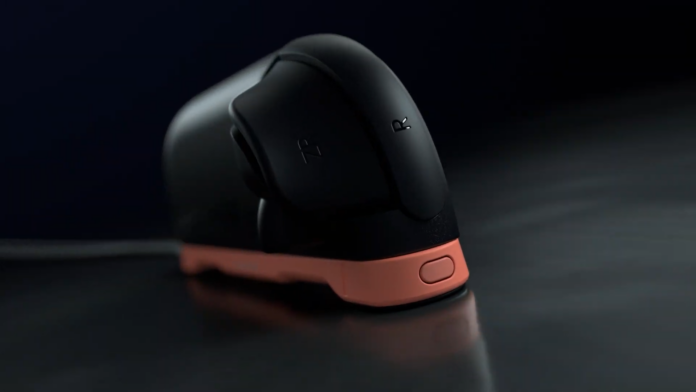
During the reveal trailer, there’s a moment where a pair of detached Joy-Cons are lowered onto a surface, attachment side down. They connect to a pair of connectors that seem to have relatively flat bottoms, and then slide across the surface like a mouse on a mouse pad. If you look closely, you can even see something that looks like a slider pad on the bottom of one of the connectors, leading further credence to the theory.
Rumors had been flying in the lead-up to the Nintendo Switch 2 reveal that this would be possible due to a sensor on the inside of the Joy-Cons similar to the sensor on the bottom of a computer mouse. But thus far, Nintendo hasn’t officially confirmed this is true, nor what it would mean if it is.
Nintendo Switch 2 – First Look
One of the first upcoming video games that came to mind following the reveal was Firaxis’ Civilization 7. The 4X strategy game is already confirmed as coming to the original Switch, and it’ll no-doubt work on the Switch 2 via backward compatibility. But will there be a bespoke Switch 2 version that takes advantage of the new Joy-Con and lets you play Civilization 7 as if you were using a mouse?
IGN brought up the Switch 2 reveal and that apparent mouse functionality in a recent interview with Civilization 7 lead designer Ed Beach and executive producer Dennis Shirk, and while Beach remained silent, Shirk offered a coy response that is sure to spark even more speculation.
“It is definitely intriguing,” Shirk teased. “You always do some trade-offs when you have to deal with pure console controls. And the announcement has some great stuff in it. I love what they’re doing with the controllers. It’s all very cool. That’s about all I can say about it in terms of an opinion. I think it looks awesome and they’re not wrong, so it would be cool for something like that.”
Of course Firaxis isn’t going to announce a Nintendo Switch 2 version of Civilization 7 — it’ll leave that to publisher 2K Games. But with a Switch 2 Direct set for this April, perhaps we will find out either way soon.
Wesley is the UK News Editor for IGN. Find him on Twitter at @wyp100. You can reach Wesley at wesley_yinpoole@ign.com or confidentially at wyp100@proton.me.
There’s something goofy going on over on the PlayStation Store and the Nintendo eshop. Over the last few months, the two storefronts have been slowly filling up with what some users are referring to as “slop.”
Kotaku and Aftermath have both detailed this problem, highlighting how the eshop specifically seems to be advertising more and more and more games that are using a combination of generative AI and misleading store pages to trick users into purchasing cheap, low-quality games that aren’t what they claim to be. This problem has recently spread to the PlayStation Store as well, filling the “Games to wishlist” section in particular with a lot of weird-looking stuff.
Critically, the games in question aren’t just run-of-the-mill “bad” games. Unremarkable games get released every day on every storefront and have just as much right to be there as any other game. What’s happening here is different: it’s a seeming flood of very similar-looking things that are crowding out everything else. The so-called “slop” games are usually sim games, almost always on sale perpetually, often play on themes used by other popular games or even rip off their concepts and names entirely, often use hyper-stylized art and screenshots that stink of generative AI, and usually in practice don’t look or play anything like what the storefront images promise. They are often janky, with poor controls and numerous technical issues, and often include very few features or anything interesting to do at all.
What’s more, as various users have pointed out, these games are often churned out mercilessly by a very small handful of companies. And as YouTube creator Dead Domain found out when they did a deep dive into the issue, these companies are seemingly impossible to track down and hold accountable, having little to no useful public websites or business information. Some even seem to be changing company names every so often to obfuscate things even further.
In recent months, there has been a growing outcry from users of both stores to get some degree of regulation on these storefronts and tone down what’s being referred to as “AI slop.” This is especially true in light of consumer complaints regarding the terrible technical performance of Nintendo’s eshop, which seems to be running slower and slower every day as more and more games clog up each page.
In an effort to get some answers on what’s happening and what can be done about it, I looked into how these games are ending up on these storefronts en masse in the first place, why PlayStation and Nintendo’s storefronts are especially egregious right now, why Steam is seen as inoffensive from a user perspective, and why Xbox’s store is (relatively) unaffected.
The Magical World of Cert
I spoke to eight individuals in game development and publishing all of whom requested anonymity out of fear of platform holder reprisal. All of them had recent, extensive experience releasing games on Steam, Xbox, PlayStation, and Nintendo Switch in various combinations. Together, their accounts helped me better understand the process for actually getting a game released on any of the four major storefronts…which perhaps offers a clue as to why some game stores are suffering from more “slop” than others.
Very, very generally, the process for all four storefronts roughly goes something like this. First, a developer or publisher has to pitch to Nintendo, Sony, Microsoft, or Valve who they are and what they want to ship on the storefront to gain access to development backend portals and, in the case of consoles, devkits.
From there, the developer or publisher fills out forms describing their game and what it entails. Platform holder paperwork tends to ask questions such as whether the game is single- or multi-player, if it requires an internet connection, what controllers it uses, and other technical elements. Then it’s on to “cert” (or certification, or lotcheck, all are roughly the same process), where the platform holder checks to see if the build fits platform requirements. These are very specific technical requirements, such as checking what happens if a save is corrupted, what happens if a controller gets disconnected during gameplay, and so forth. Helpfully, you can see a lot of the requirements for Steam and Xbox specifically on their respective public pages. Nintendo and Sony do not publish their requirements.
This process also checks to ensure games aren’t breaking any laws (such as including a red cross on a white background in violation of the Geneva Convention) and are accurate to their ESRB ratings. Multiple people I spoke to emphasized that platform holders are especially strict about age ratings, and that any change or seeming discrepancy can immediately and massively halt a game’s release.
A common misconception amongst The Gamers™ is that [cert] is tantamount to a QA check.
“
A few people I spoke to noted that the lotcheck/cert process is often misunderstood by gaming audiences:
“A common misconception amongst The Gamers™ and even inexperienced devs is this is tantamount to a QA check,” said one publisher. “This is incorrect, that’s the responsibility of the developer/publisher prior to submission. The platforms check to make sure the game’s code complies with hardware specifications.”
If a game passes, it’s ready to be released. If it fails, it’s kicked back to the developer or publisher and has to be resubmitted with the issues fixed. Multiple people I spoke to told me that they rarely received concrete information from platform holders on how to resolve submission failures, they usually only received error codes. Nintendo especially was mentioned by several as frequently rejecting games and offering little to no clear explanation as to why.
Front and Center
As for the store pages themselves, those I spoke to told me that all the platform holders do have requirements of some kind asking developers and publishers to use screenshots that accurately represent the game they’re selling. But there’s no concrete process for checking that. The reviews of storefront screenshots, I’m told, are largely just to check to ensure there’s no competing imagery (i.e. a screenshot showing PlayStation button controls on an Xbox store page) and are in the correct language for the storefront they’re on.
One person did have a story about a review catching a screenshot that didn’t accurately represent the game in question:
“I know of one game that had to resubmit screenshots because the developer (who was not malicious and who is a respected team in the industry, but simply doesn’t have expertise in this process) submitted PC screenshots that had foliage and reflections that would plainly be impossible to render on the Nintendo Switch,” they said. “So Nintendo asked them if they were really from the Switch version and then they immediately realized their mistake. Nintendo’s store team does not have access to game builds, and the cert team does not have access to store pages. Frequently those teams may not even be on the same continent.”
I was also told that while Nintendo and Xbox review all changes to store pages before they’re allowed to go live, PlayStation just does one check near launch to confirm everything looks okay. Valve, meanwhile, does a review of the store page before it’s initially set live, but one person told me that after that, they never look at the page again. “You can quite literally submit the store page as one game, get Valve approval and then change everything and then put it live,” they said.
A few folks I spoke to did indicate that the storefronts in question do at least some level of diligence in their reviews checking to see if the product listed matches the game being sold, and that the description of the game given is accurate. But that diligence can vary wildly, according to one person:
“Typically, checking for accurate store information is not done in advance; rather, we’ve found that platform holders will usually trust the developer and what information they provide. In other words, developers get to ask for forgiveness instead of permission, basically.”
Developers get to ask for forgiveness instead of permission.
“
And even when a store page is checked, the standards for what counts as an accurate representation of a game are loosely defined enough that plenty of games can slip through the cracks. As another person put it:
“This can be as simple as “Street Survival: Homeless Simulator” [one of the examples of so-called ‘slop’ I sent this person when pitching them on the piece] explaining [on its store page] that you start from having nothing to getting harder as you progress, and their screenshots not displaying anything at this moment that breaks [Technical Requirements Checklist].”
What’s more, those I spoke to suggested that the punishment for having a misleading screenshot or one that otherwise breaks the platform holder rules is (usually) just being asked to remove the offending content. That’s not always the case – one person pointed out to me that developers have an incentive to do the best they can, or risk being delisted or removed as an approved developer. But something as simple as having a screenshot that’s not quite representative of the actual game usually results in barely a tap on the wrist…if the platform holder even notices it in the first place.
Also, according to everyone I spoke to, none of the three console storefronts have any rules about using generative AI in any way, whether it’s in games themselves or in generating assets for use on store pages. Steam does have a section in its content survey where it asks developers to disclose if there’s any generative AI used in their development or product, as well as explain its use in detail. But it doesn’t limit its use in any way.
Eshop to eslop
With that very generalized outline of the process out of the way, the question remains: why are Sony and Nintendo’s store pages being flooded with what seem to be misrepresented, low-effort sim games using generative AI on their store pages? Why is Xbox not impacted as much by this problem? Why does no one care that Steam also has a bunch of games that fit this descriptor? According to the people I spoke to, there are a few reasons.
Multiple developers explained to me that while Nintendo, Sony, and Valve all vet applications on a developer or publisher basis, Microsoft is the only company that vets on a game-per-game basis. This means that for the former three, once you have been approved once, it’s much easier to simply pump games out onto the storefront in question as long as it can pass cert or lotcheck. But because Xbox approves on a game by game basis, it’s less susceptible to the slop problem. “Which is why Xbox has fewer (not no) ‘game-shaped objects’,” one publisher suggested.
“I think [Xbox] really puts a lot of effort into their service,” said another person. “I would say they are tougher to launch on than something like [Epic Games Store] or Steam solely because they have pretty high standards for their pages and are very hands-on. In my experience, you work with their ID team directly to work through both your page and build cert. They will truly bend over backwards for you, even if you don’t see eye to eye.”
Over at Nintendo and PlayStation, it seems pretty clear that the process of approving on a developer by developer basis and focusing only on technical platform violations is resulting in a handful of companies gaining the ability to clog up both storefronts’ sales, new releases, and recommendation pages with samey, low-quality games plagued by generative AI store assets.
“Nintendo is probably the easiest to scam,” said one developer. “Once I’m in the door, I could make ‘Fart Fart Boobie Fart: The Game’ and maybe it would eventually get taken down, but it’s so odd.”
Nintendo is probably the easiest to scam. I could make ‘Fart Fart Boobie Fart: The Game’ and maybe it would eventually get taken down.
“
As a publisher pointed out to me, there’s even a special trick some use to both ensure their games are at the top of sales pages on the Nintendo eshop:
“So many games will release a bundle and set their discount for 28 days long, the maximum amount of time you can be on discount,” they explained. “They will then create a new bundle with a different (or identical!) configuration of game + DLC and set it for release the exact day the previous bundle’s sale expired rather than waiting for Sale Cooldowns. This causes it to constantly be near the top of ‘New Releases’ and always be in Discounts, at the expense of dozens and hundreds of real games that people worked very hard on.”
And another developer described a similar problem, this time on PlayStation:
“On all consoles, you get the opportunity to get featured, but you’re also on these automatic lists,” they said. “If people are just pumping crap into the system, you get pushed down the list. Any list. The systems are being overwhelmed and you’re going to get pushed out of there. I’ve been working on my game for six years, someone else has been working on their game for six months and makes a dozen copies of it…it’s just crushing.”
Though many users have attributed the eslop problem to generative AI, it’s not actually clear that generative AI is the main issue here. While it’s true that a number of these games appear to use storefront assets that were made using generative AI, others seem to just be generic concept art. The games themselves, whatever their quality levels, are still made by people. Generative AI technology is a far cry from being able to simply spit out a game that would pass even the most lax of the cert processes described to me. It’s also worth noting that while Xbox seems to be the least slop-ridden of the storefronts, multiple folks I spoke to suggested it would be the least likely to discourage developer generative AI use in the future, given its heavy investment in the technology.
The ‘Games to Wishlist’ section on the PlayStation Store at the time this piece was written.
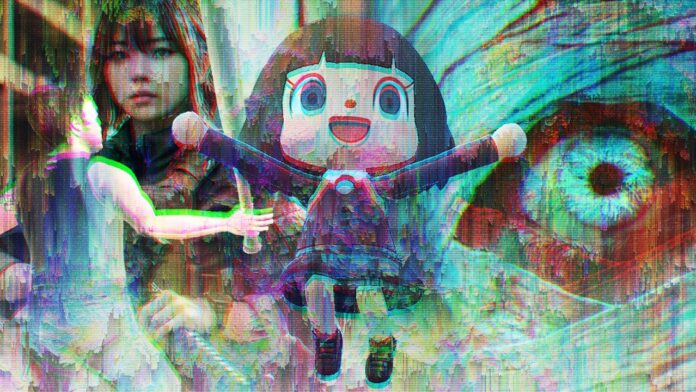
This is probably a good place to point out that at least some of what users are complaining about is not entirely a “slop” issue. It’s exacerbated by that old, impossible chestnut: discoverability. Xbox, for instance, surfaces highly curated store pages to users on console. So while it’s not immune to these types of games, it’s harder for an average user to actually stumble across them, and thus Xbox appears to have less of a problem. PlayStation uses similar curation to Xbox on its pages, but its “Games to Wishlist” tab is by default sorted by release date, with all unreleased games sorted up top in alphabetical order. This means that anything with a store page on PlayStation and a vague release window of 2027 or 2026 gets thrown right up top, resulting in the store surfacing games like “Ambulance 911 Simulator Paramedic” or “Kebab Simulator Taste Revolution” and whatever this AI-ridden Animal Crossing-looking thing is.
Steam probably has, just quantitatively, the most potential “slop” of any storefront, but no one seems to be mad at Valve over it at the moment. That’s not because Steam is some perfect storefront – in fact, it has a long, well-documented history of discoverability problems for indies. However, it has two things going for it with regard to “slop”. The first is that from a user standpoint, Steam’s storefront has a pretty good range of options to discover, sort and search for new games based on tons of different factors, most of which don’t actively promote games like the ones in question. The second is that because it’s so comparatively easy to publish games on Steam, the new releases section is constantly refreshing itself in a way that no other storefront is, meaning any new “slop” is very quickly lost amongst dozens of other new games of varying quality. There are simply too many video games.
And then there’s Nintendo. Nintendo, from what I can tell, just throws all the New Releases into a big, unsorted, messy pile and calls it good.
All Games Allowed
Over the last few months, users have been begging Nintendo and Sony in particular to get their act together on storefront regulation to reduce the relentless tide of samey-looking games overwhelming store pages. We reached out to both companies ahead of publication to ask about any plans in the works, but neither returned our request for comment. Microsoft also did not return a request for comment.
The publishers and developers I spoke to for this piece were not hopeful. Several said they had no expectation that Nintendo would either fix the eshop now, nor would the problem be solved with the newly-announced Nintendo Switch 2. One noted that at least in Nintendo’s case, each generation its storefront experience improved by a very, very small amount. “It’s logic-defying how their stores are so bad,” they said. “They could check anyone else’s store and see what to do…I am optimistic it will be 10% better than the Switch store.”
That said, it was also pointed out to me that Nintendo’s web browser eshop is…actually mostly fine, at least as far as both usability and lack of slop floods are concerned. It’s really only once people get into the eshop on the system itself that the problem presents itself. Perhaps there’s some hope that the Nintendo Switch 2’s eshop might look and function more like the online web browser store than the current, laggy, console app.
NIntendo’s browser storefront is…fine, honestly?
While there was similar pessimism around Sony, another developer pointed out to me that Sony has taken action on this exact issue in the past. They brought up an incident back in 2021 when Sony sent a letter to its developer partners alerting them to a crackdown on “spam” or “repetitive” content that at the time was flooding the PlayStation Store with many games that were very similar to one another. These games (the most notable of which was called “The Tiger T”) were specifically designed to be attractive to trophy hunters, with very simple mechanics and easy-to-collect trophies. However, they were being published in such a high volume they were crowding out unique games, just like the “slop” is today. So it’s entirely possible that Sony eventually takes action once again in this new situation.
But not everyone thinks aggressive platform regulation is the solution. Earlier this month, for instance, publication Nintendo Life released something called “Better eshop” that purported to be a version of the Nintendo eshop with “shovelware, asset-flips, and hentai games” filtered out, as well as with toggle switches to filter out AI shop images. However, it quickly came under fire from developers who found their games erroneously listed in these categories, with a number reporting being wrongfully flagged for using AI, beloved indies getting listed as shovelware, and notably a number of games getting caught by the “romance” filter just for having a relationship of any kind in the game, among other criticisms.
While this is an extreme example and Nintendo Life has since updated its filters to be less aggressive, this wouldn’t be the first time that overly aggressive filters hurt indie games that didn’t deserve it.
Personally, I fear that game platforms might accidentally target quality software.
“
One publisher put their concerns about more stringent platform regulation to me another way:
“To be honest, all this talk about ‘quality control’, especially coming from non-developers, can be intimidating. Personally, I fear that game platforms like Nintendo, if they decide to actually take action, might accidentally target quality software that doesn’t rely on generative AI or similar shortcuts. If our consistent rejections by ID@Xbox and Nintendo are any indicator, then platform holders’ judgment of software legitimacy can be quite arbitrary. Nevertheless, non-developers should be aware that most of us aren’t out to get anybody, or trick anyone out of their money–and neither are the platform holders with which we cooperate.”
And one more person I spoke to ended on a note of sympathy for the platform holders, which they thought may be monoliths but are ultimately staffed by regular people who have to examine an ever-growing flood of games for specific criteria. And critically, it’s not their job to identify any submitted video game as “good” or “bad”.
“Generally, first-parties don’t want [junk AI] games, but we forget perhaps that game submissions aren’t really checked by corporations but rather by people, and being able to differentiate between a student project, a simply bad game, an asset flip or an AI-generated game is perhaps not as easy as we might think,” they said. “First-parties are trying to strike a balance between allowing bad games to be published and cynical cash grabs. And sometimes it’s not easy to know where to put the foot down.”
Rebekah Valentine is a senior reporter for IGN. You can find her posting on BlueSky @duckvalentine.bsky.social. Got a story tip? Send it to rvalentine@ign.com.
It’s been a long time since there’s been a new game in Namco’s Ridge Racer series, and it’s anyone’s guess if the franchise will make a comeback. But in the interim, Ridge Racer 64–which was originally released in February 2000–has made a welcome return on Nintendo Switch. As seen in the announcement trailer below, Ridge Racer 64 still has that classic arcade-style charm a quarter century later.
Unfortunately, this game isn’t available as a standalone purchase. It was re-released earlier today exclusively for Nintendo Switch Online + Expansion Pack subscribers–which costs $50 per year for individuals and $80 for families in exchange for access to N64, Sega Genesis, and Game Boy Advance games as well as select DLC for modern titles.
Now Playing: Nintendo Switch Online – Nintendo 64 Update | Ridge Racer 64
Ridge Racer 64 includes a Quick Play option for anyone who just wants a fast run through the Revolution Novice course. Veteran drivers can try their hand on the Grand Prix and choose from nine different race tracks.
The game also includes Car Attack, Time Attack, Battle Mode, Stage Mode, and Team Mode. The trailer also confirms the return of the game’s multiplayer option for up to four drivers at once. This might be the best way to experience any Ridge Racer game, especially since Arcade1Up’s Ridge Racer cabinet is long out of production.
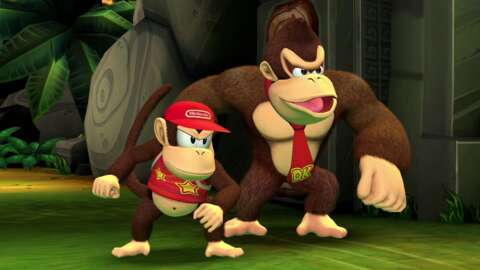
Donkey Kong Country Returns HD is up for grabs for a pretty steep discount just two weeks after its release for Nintendo Switch. Over at Woot, you can pick up a physical copy of the new platformer for only $45 (was $60). Woot previously offered the game for $50 on launch day (January 16) before selling out. If you missed that deal, now you can score an even better one. We’d be surprised to see Woot’s offer stick around for long.
The Amazon-owned outlet store that has had a bevy of Nintendo game deals in recent months, including dozens of active promotions. DKC Returns HD is a wonderful side-scrolling platformer with 80 levels spread across nine worlds. It originally released in 2010 for Nintendo Wii and was ported to 3DS in 2013. If you want to revisit the challenging adventure starring DK and Diddy in high definition, you may want to grab this deal soon. Woot’s launch discounts on new Nintendo games tend to sell out.
As with all of Woot’s Switch games, the listing notes that DKC Returns HD is region-free and will work on all Switch consoles. Woot sometimes sells imported games from a different region. These always support English and are functionally the same. The only difference you’ll notice out of the gate is the ESRB emblem will be replaced by another territory’s ratings board. Additionally, if you want DLC, you’ll need to purchase it from region’s eShop that matches your copy of the game. Donkey Kong Country Returns HD is self-contained, with no DLC expected, so this potential snag won’t impact you here.
Amazon hasn’t officially carried Nintendo-published games since Spring 2024, so you’ll only find third-party listings on Amazon once a Nintendo game launches. But you can use your Amazon account to purchase games from Woot, which makes things extremely simple for new Woot customers.
Donkey Kong Country Returns HD has the same joyful cover art as the Nintendo Wii and 3DS versions.
Essentially presented as the “definitive” edition of the platformer, Donkey Kong Country Returns HD offers the original challenge of the Wii version while also giving players the option to play with the friendlier “Modern Mode” settings from the 3DS edition. It also contains all of the extra levels from the 3DS version. Even with Modern Mode enabled, DKC Returns is one of the more challenging contemporary Nintendo platformers. If you liked Donkey Kong Country: Tropical Freeze, you will almost certainly have a great time running through the 80-level, nine-world gauntlet solo or cooperatively with a partner.
More Gaming, Tech, and Entertainment Deals & Preorders
We use cookies on our website to give you the most relevant experience by remembering your preferences and repeat visits. By clicking “Accept”, you consent to the use of ALL the cookies.
This website uses cookies to improve your experience while you navigate through the website. Out of these, the cookies that are categorized as necessary are stored on your browser as they are essential for the working of basic functionalities of the website. We also use third-party cookies that help us analyze and understand how you use this website. These cookies will be stored in your browser only with your consent. You also have the option to opt-out of these cookies. But opting out of some of these cookies may affect your browsing experience.
Necessary cookies are absolutely essential for the website to function properly. These cookies ensure basic functionalities and security features of the website, anonymously.
Cookie
Duration
Description
cookielawinfo-checkbox-analytics
11 months
This cookie is set by GDPR Cookie Consent plugin. The cookie is used to store the user consent for the cookies in the category "Analytics".
cookielawinfo-checkbox-functional
11 months
The cookie is set by GDPR cookie consent to record the user consent for the cookies in the category "Functional".
cookielawinfo-checkbox-necessary
11 months
This cookie is set by GDPR Cookie Consent plugin. The cookies is used to store the user consent for the cookies in the category "Necessary".
cookielawinfo-checkbox-others
11 months
This cookie is set by GDPR Cookie Consent plugin. The cookie is used to store the user consent for the cookies in the category "Other.
cookielawinfo-checkbox-performance
11 months
This cookie is set by GDPR Cookie Consent plugin. The cookie is used to store the user consent for the cookies in the category "Performance".
viewed_cookie_policy
11 months
The cookie is set by the GDPR Cookie Consent plugin and is used to store whether or not user has consented to the use of cookies. It does not store any personal data.
Functional cookies help to perform certain functionalities like sharing the content of the website on social media platforms, collect feedbacks, and other third-party features.
Performance cookies are used to understand and analyze the key performance indexes of the website which helps in delivering a better user experience for the visitors.
Analytical cookies are used to understand how visitors interact with the website. These cookies help provide information on metrics the number of visitors, bounce rate, traffic source, etc.
Advertisement cookies are used to provide visitors with relevant ads and marketing campaigns. These cookies track visitors across websites and collect information to provide customized ads.